
Striving for Excellence
- Future Focused Education
- Focus on Technology
- Exam Results & Destinations
- Careers - The Bridge
- Challenge and Extend
- Learning Resources Centre
 ISI Report
  Vision & Ethos
 As a School, we have always been at the forefront of the use of technology in education; so that our students acquire the skills and agility to be the change-makers of the future.
Frequently Asked Questions on Use of Technology
We are a forward-thinking school. Our educational ethos is underpinned by an ambition to future-proof your daughter so she is ready to grasp the opportunities that await her post-school with confidence. She will be entering a digitalized workplace. It is an educational imperative that our students know how to use different types of technology effectively, that she knows how to think critically about technology and remains curious as to how technology can improve her life and those around her. She needs to be confident to adapt and adopt new technological solutions.
Students should be taught to understand the advantages and the risks associated with tech. If we do not teach this as part of our education, we are doing them a disservice. iPads are part of a BGS student's toolbox, but they are only one element of a student's classroom experience. It is all about balance - both in school and outside of school.
We have been pioneers in this area for over a decade; we are experts in using tech effectively and finding the balance in the classroom. Our approaches are backed up by academic evidence and good practice.
Our students leave with a core of confidence knowing they can navigate technology at every level, but they also are aware of the dangers, the misuse, and the limitations of an overuse and over-reliance on technology. We take our responsibility seriously and have programmes, policies, and procedures in place to support students and parents.
Yes, every student from Year 3 to Upper Sixth has an iPad. In the Junior School, they are left at school overnight; in the Senior School, they take them home at the end of the day.
Not at all. Used properly with effective teaching and supervision, iPads and VR can aid creativity and self-agency, building strong independent learning skills. There are exceptionally brilliant online resources to aid learning and bring subjects to life, increasing engagement in learning and understanding. This enables students to use strategies that support their individual approaches to learning.
Students use a huge variety of learning tools across a day. The iPad will play a part, but it is never the sole vehicle for learning. You will see in a classroom, books, pencils, pens, rough paper, and iPads on every desk. It is part of their school kit but not the only item. We still greatly value handwriting and the time taken to think before committing an idea to paper. Look around the JS and you can see this in the classrooms and in our displays around school.
We would always recommend that parents limit screen time at home and follow age appropriate guidance. Students are not on their iPads all day, they are using a huge range of tools and from an early age understand that iPads are part of their educational resources.
Interestingly we have families noticing in the Junior School that as children start to use iPads in school they start to see it as a learning tool and not an item for play/distraction. They report that their daughter no longer asks to use iPads at home.
No, our approach is to ensure our students are future-proofed and have a broad set of skills which prepares them for life after school. We would be failing in that commitment if we did not include technology in our teaching and learning approaches.
It is integrated into learning to strengthen collaboration, communication, research, and critical analysis skills.
All iPad use is monitored by our IT department and linked through our network; students cannot get onto any unauthorised channels. If any misuse is attempted, it is flagged and dealt with in the same way as any other behavioural concern.
We run digital well-being programmes throughout the school, working in partnership with both students and parents about appropriate use, misuse, and how to use parental controls effectively. We focus on embedding good digital habits in the same way that we focus on promoting the importance of healthy eating, exercise, and sleep.
No, once students leave BGS, their iPads are off our network. We cannot monitor them at home. This is where we work in partnership with parents to ensure safe and careful use of all devices. There will be times when students will complete homework on iPads.
Only Senior School students take iPads home. Junior School students leave their iPads in school.
Our Sixth Formers are allowed to bring in laptops to support study habits. We teach computer science and have a wonderful tech lab, which includes robotics, coding, and eSports. VR is integrated into the curriculum.
Laptops and other digital tools can be valuable resources to support some of our SEND students in line with appropriate learning strategies.
It is important our students know how to use AI effectively to enhance their learning. They need to understand how to ask effective questions to protect their critical thinking and problem solving development, how to question and analyse the outcome, and how to critically assess results. The use of AI will be a significant element of their working lives, and we need them to be able to use it intelligently. We operate an AI traffic light system to monitor appropriately as we build skills in the students.
We are a phone-free school from Year 3 to Year 11; Sixth Form students are allowed limited access to phones in the Sixth Form Hub. No phones are allowed in or around the rest of the school site.
Many of our students bring phones to school so they can contact parents about transportation arrangements. In the Junior School, we expect phones to be in restricted mode from 8:30 am to 4:00 pm. In the Senior School, phones are placed in phone pouches before the start of the day and released at 4:00pm when the students leave school. Sixth Form can use their phones in their Common Room.
Phones can be taken on trips, but will be placed in pouches and only used at certain times with express permission of staff.
Apple Distinguished School
The School’s success of implementing iPads into the curriculum has helped us become an Apple 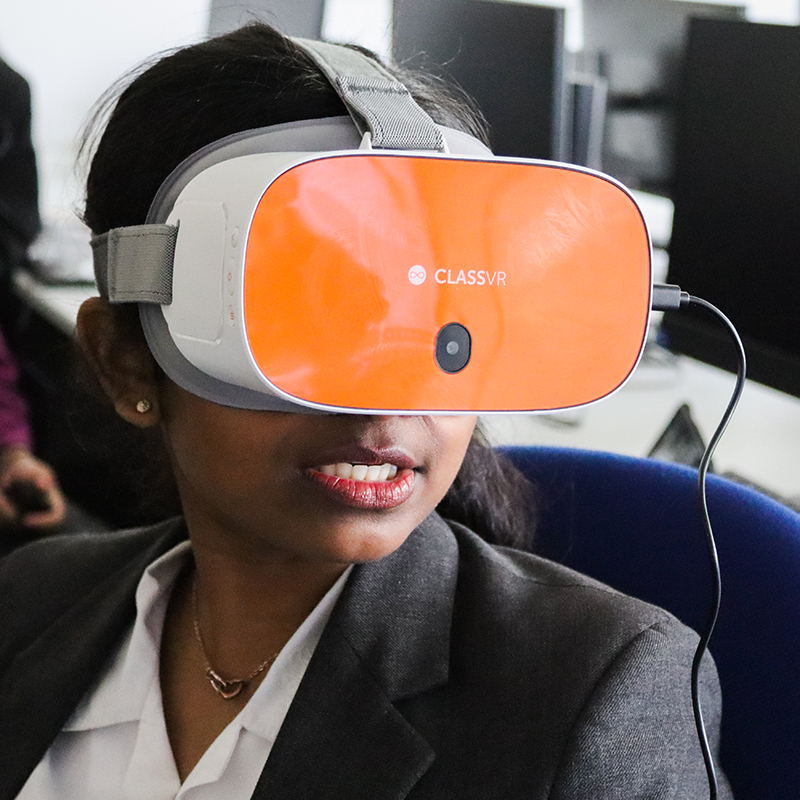 Distinguished School – an honour only a handful of schools in the UK can lay claim to. The title is reserved for schools, who are invited by Apple to apply, that meet criteria for innovation, leadership and educational excellence, and demonstrate a clear vision of exemplary learning environments. However, technology does not stand still and we must continue to look to the future and anticipate the next technological breakthrough which will add real value to our students.
The extensive use of iPads across learning helps us embed technology skills discreetly and continually throughout their education ensuring that our digital fluency is keeping pace with the changing in technological advancements and that our students stay ahead of the curve, and that these skills become part of their everyday learning.
Robotics in Learning
Students in the Junior School use Sphero robots to see the physical results of their coding. They code elements of a Shakespearean play, enabling characters to move around the stage and recite lines using code.
As they transition through to Senior School in Year 7, they learn how to apply these skills into text based programming to solve more challenging problems as well as looking at networking, computer hardware and cybersecurity. Our students are adept in collaborating with the use of cloud technology through Google Drive being second nature to them, to give them flexibility and ownership over their work.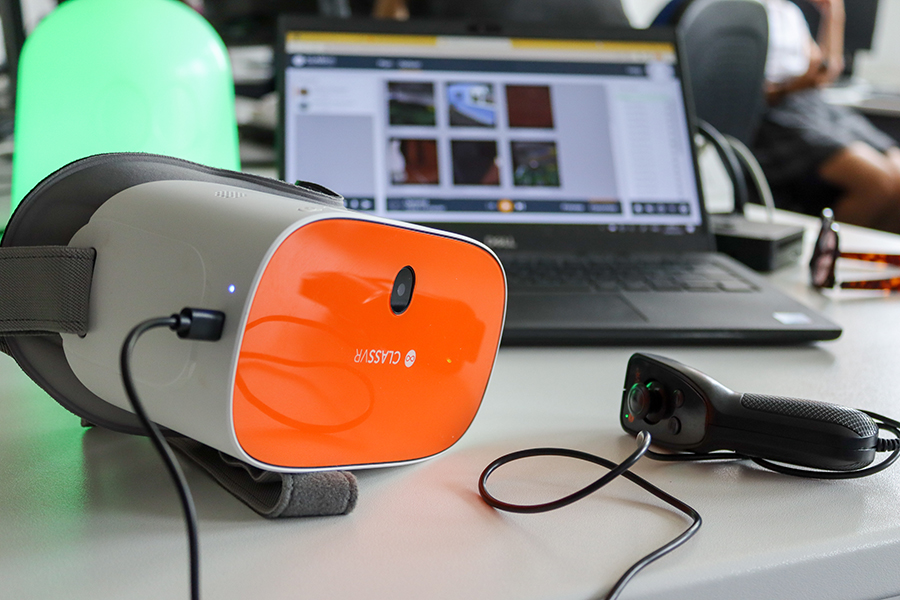 To further our students’ interest and understanding of robotics, we have invested in a humanoid robot capable of machine learning. Students are able to use the robot to investigate social robotics – how humans interact with robots with human-like characteristics, and use machine learning to recognise objects, faces or even emotions and react as programmed to them. The robot can be programmed to simulate real world situations and our robotics groups are looking at various projects including training the robot to be an exercise companion, a medical assistant or a social aid.
Artificial Intelligence at BGS: Learning with Purpose
We recognise that artificial intelligence (AI) is reshaping how we live, work and learn. We prepare our students not only to use AI tools, but to understand, question and lead with them responsibly. We ensure our students are not passive consumers of technology, but confident, critical and ethical innovators ready to embrace the opportunities and responsibilities of an AI-enhanced world.
AI is integrated thoughtfully across the curriculum and co-curriculum. Students explore AI in contexts appropriate to their age and stage; from understanding how algorithms make decisions to using generative tools for creativity, problem-solving and research. We teach students how to critically evaluate AI outputs, recognise bias and understand the ethical implications of their use.
Our approach focuses on three pillars:
Students learn the building blocks of artificial intelligence - what it is, how it works and where it is used. They build practical confidence with tools that support ideation, coding, data analysis and creative expression.
We embed discussions about the impact of AI on society, on fair access to information and on individual privacy. Students learn not just to use AI, but to question it - to spot bias, check sources and make informed judgements.
AI is not an add-on; it is embedded into meaningful learning experiences. In robotics, students build systems that learn from data; in humanities, they interrogate AI-generated narratives; in design and computing, they explore machine learning applications with real datasets.